

Bivens
Key court decisions and legal standards that shape prisoner civil rights litigation.


How to Use Case Law
Case law refers to decisions written by judges in previous court cases. These decisions interpret laws, explain legal standards, and show how courts have applied rules to specific facts. When you are writing motions, responses, or appeals, case law helps support your legal arguments by showing the court that other judges have ruled in favor of positions similar to yours. Courts pay attention to legal authority, not just your opinion — and case law is one of the strongest forms of authority you can cite.
To use case law effectively, identify relevant decisions from the same court or from higher courts that have addressed similar issues. When you cite a case, include the full citation and briefly explain why the ruling supports your position.
For example, you might point out that in a case with similar facts, a court found that failing to provide medical care violated the Constitution. Simply mentioning a case is not enough — you must show how the legal reasoning applies to your situation.
Organizing and presenting case law clearly also matters. Break your arguments into issues, support each issue with facts and legal authority, and explain why the cases you cite are persuasive. This resource offers guidance on how to read opinions, understand legal reasoning, and incorporate case law into your filings so your arguments are stronger and more credible to the court.
Important cases to read and cite:
Key Supreme Court Cases
Supreme Court cases shape what types of civil rights lawsuits people in federal custody are allowed to bring. In Bivens v. Six Unknown Named Agents, the Supreme Court recognized an implied right to sue federal officials for certain constitutional violations. Since then, the Court has made clear that only three types of claims are clearly permitted under Bivens:
-
Fourth Amendment claims involving unlawful searches and seizures (Bivens),
-
Fifth Amendment claims involving gender discrimination in federal employment (Davis v. Passman), and
-
Eighth Amendment claims involving deliberate indifference to serious medical needs by federal prison officials (Carlson v. Green).
These cases remain the core foundation for Bivens litigation.
In recent years, the Supreme Court has limited the expansion of Bivens into new areas. In Egbert v. Boule, the Court emphasized that extending Bivens beyond these three established contexts is strongly disfavored. Courts must first ask whether a claim arises in a "new context" — meaning it is meaningfully different from Bivens, Davis, or Carlson. If it is new, courts then consider whether there are special factors counseling hesitation, such as alternative remedies or concerns about separation of powers. Under Egbert, even a single reason to hesitate is usually enough to block extension.
Despite these limits, Carlson remains good law, and courts — including federal appellate courts — continue to recognize Eighth Amendment Bivens claims based on deliberate indifference to serious medical needs. This resource explains how to identify whether your claim fits within an existing Bivens context, how defendants may misuse Egbert to overstate its reach, and how to rely on binding Supreme Court precedent when responding to motions. Understanding these key cases helps you frame your claims accurately and challenge incorrect legal arguments.
Importantly, courts have continued to recognize valid Bivens medical-care claims even after Egbert. In Stanard v. Dy, the Ninth Circuit Court of Appeals reaffirmed that Carlson v. Green remains controlling law for Eighth Amendment claims based on deliberate indifference to serious medical needs. The court held that claims involving denial or delay of medical treatment do not arise in a "new context" simply because the facts differ from Carlson. Differences in the severity of harm, type of medical condition, or form of care denied do not automatically bar a Bivens claim. Stanard confirms that federal prison officials can still be held personally liable when they knowingly fail to address serious medical needs, and it provides important guidance for responding to defendants who argue that Egbert eliminates all Bivens claims.
Important cases to read and cite:


Circuit Court Cases
When filing a civil lawsuit, it is critical to identify the correct federal district court. In most cases, this will be the district where the harm occurred or where the events giving rise to the claim took place. Filing in the wrong district can result in the case being dismissed or transferred, which may cause delays or lead to missed deadlines. Courts do not automatically correct filing errors, and jurisdiction problems are a common reason cases are dismissed.
When making legal arguments, it is important to start with case law from your own court whenever possible. Decisions from the same federal district court where your case is filed — as well as decisions from your circuit court of appeals and the U.S. Supreme Court — are considered binding authority.
This means the judge is required to follow those decisions if they apply to the issues in your case. Leading with binding case law strengthens your arguments and shows the court that your position is supported by controlling precedent.
Example: If you are in the Ninth Circuit, then you should stick with and cite Ninth Circuit Case law.
Prisoner's can still pursue federal employees for deliberate indifference to a serious medical need. See Stanard v. Dy, No. 21-35582 (9th Cir. 2023).
Case law from other district courts or other circuits can still be useful, but it is considered persuasive authority, not binding. Judges may consider persuasive cases for guidance, especially when there is no controlling decision on a specific issue, but they are not required to follow them. Persuasive authority works best when it is consistent with binding law or when multiple courts have reached the same conclusion.

PLRA Cases
The Prison Litigation Reform Act (PLRA) creates procedural and legal barriers that frequently lead to dismissal of prisoner civil rights cases. Courts strictly apply these rules, often without regard to the seriousness of the harm alleged. Understanding how courts interpret the PLRA — and how other courts have ruled in similar situations — is critical to preserving your claims and responding effectively to defendants' arguments.
Below are the most common PLRA issues raised by defendants, along with guidance on how courts analyze them.
Exhaustion of Administrative Remedies
Exhaustion is the most frequently litigated issue in PLRA cases. Prisoners are required to properly complete every step of the applicable grievance process before filing suit. Defendants often argue that a case must be dismissed due to missed deadlines, technical errors, or failure to name specific staff members. Courts, however, have recognized important limitations on the exhaustion requirement, including situations where remedies were unavailable, obstructed, or impossible to complete.
Supporting Case Law: [Insert controlling and persuasive cases addressing exhaustion, availability of remedies, improper rejection of grievances, staff interference, or misleading instructions.]
"Three Strikes" Rule
The PLRA's three-strikes rule limits a prisoner's ability to proceed in forma pauperis if they have had three prior cases dismissed as frivolous, malicious, or for failure to state a claim. Defendants may raise this rule to bar access to the courts. Courts have also recognized exceptions, particularly where a prisoner faces imminent danger of serious physical injury at the time of filing.
Supporting Case Law: [Insert cases defining what qualifies as a "strike," imminent danger exceptions, and improper strike designations.]
Physical Injury Requirement
The PLRA restricts recovery for mental or emotional injuries unless there is a showing of physical injury. Defendants often misuse this provision to argue that entire cases should be dismissed. Courts have clarified that this requirement does not bar claims for injunctive relief, declaratory relief, or nominal damages, and does not eliminate liability for constitutional violations.
Supporting Case Law: [Insert cases explaining the scope and limits of the physical injury requirement, including cases allowing non-compensatory relief.]
Screening and Early Dismissal
Limits on Relief and Attorney Fees
The PLRA limits attorney fee awards and restricts courts from ordering broad institutional reforms unless specific findings are made. Defendants may argue that these limits bar meaningful relief. Courts, however, continue to allow narrowly tailored injunctive relief, damages where permitted, and enforcement of constitutional standards.
Supporting Case Law: [Insert cases addressing permissible relief, injunctive standards, and attorney fee limitations.]
Filing Fees and Financial Obligations
Even when granted in forma pauperis status, prisoners are required to pay the full filing fee over time through trust account deductions. Courts have recognized that fee obligations do not bar access to the courts but must be administered consistently with due process.
Supporting Case Law: [Insert cases addressing filing fee procedures, improper deductions, or access-to-courts concerns.]
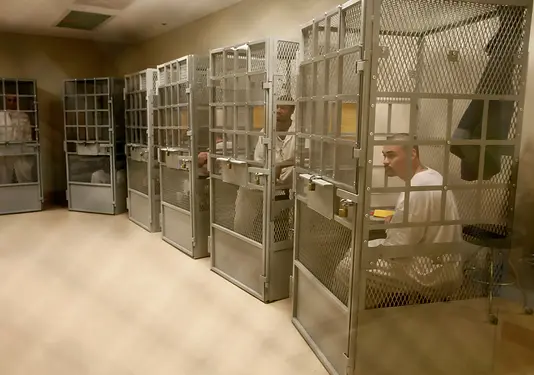
Conditions of Confinement
Claims challenging conditions of confinement focus on whether prison officials subjected an incarcerated person to conditions that violate the Constitution. In federal custody, these claims most often arise under the Eighth Amendment, which prohibits cruel and unusual punishment, and require showing that officials acted with deliberate indifference to a serious risk of harm. Conditions-of-confinement cases are fact-intensive and frequently challenged by defendants at the motion-to-dismiss or summary-judgment stage.
Courts analyze these claims by looking at both the objective seriousness of the conditions and the subjective knowledge and conduct of prison officials. Below are common categories of conditions-of-confinement claims, along with guidance on how courts evaluate them.
Unsafe or Unsanitary Living Conditions
Claims may arise from exposure to unsafe housing, lack of sanitation, overcrowding, extreme temperatures, or hazardous physical environments. Courts have recognized that prolonged exposure to conditions that pose a substantial risk to health or safety can violate the Constitution, particularly where officials knew of the risk and failed to take reasonable steps to abate it.
Supporting Case Law: [Insert cases recognizing unconstitutional conditions based on sanitation, safety hazards, overcrowding, temperature, or environmental risks.]
Denial of Medical Care or Necessary Accommodations
Conditions-of-confinement claims often overlap with medical-care claims, especially where the failure to provide accommodations, assistive devices, or accessible housing exposes an incarcerated person to repeated injury or harm. Courts look to whether officials knew of a serious medical need or disability and whether their inaction created or worsened dangerous living conditions.
***You want to make sure that you are arguing a serious medical need, or a violation of a constitutional right, such as the Rehabilitation Act, via federal employees failing to provide you with a reasonable accommodation for a disability.
Supporting Case Law: [Insert cases addressing deliberate indifference to medical needs, disability accommodations, accessible housing, or assistive devices.]
Use of Prolonged Isolation or Restrictive Conditions
Extended placement in segregation, solitary confinement, or highly restrictive housing can form the basis of a conditions-of-confinement claim, particularly when combined with denial of basic human needs, mental health care, or meaningful review. Courts evaluate the duration, severity, and cumulative impact of restrictive conditions.
Supporting Case Law: [Insert cases addressing solitary confinement, prolonged isolation, and cumulative conditions.]
Screening and Early Dismissal
Federal courts are required to screen prisoner complaints at the outset and dismiss those deemed frivolous or insufficiently pleaded. While this screening process results in many early dismissals, courts must still accept factual allegations as true and construe pro se pleadings liberally. Improper screening dismissals can be challenged through objections, motions for reconsideration, or appeal.
Supporting Case Law: [Insert cases governing pleading standards, liberal construction of pro se filings, and improper early dismissals.]
Failure to Protect from Harm
Prison officials have a duty to take reasonable measures to protect incarcerated people from known risks of harm, including risks posed by unsafe facilities, staff conduct, or other prisoners. A failure-to-protect claim may arise where officials were aware of a substantial risk and deliberately failed to act.
Supporting Case Law: [Insert cases addressing failure to protect, known risks, and deliberate indifference.]
Access to Basic Human Needs
The Constitution requires that incarcerated people be provided with basic necessities, including adequate food, water, shelter, hygiene, and the ability to maintain personal safety. Deprivations that are severe, prolonged, or combined with other harmful conditions may rise to the level of constitutional violations.
Supporting Case Law: [Insert cases recognizing constitutional violations based on deprivation of basic needs.]
The Defendants who are represented by the United States Attorney's Office, often attempt to minimize conditions-of-confinement claims by isolating each condition or characterizing them as mere discomforts. Courts, however, may consider the totality of the conditions and the real-world risks they create. This resource explains how to identify actionable conditions-of-confinement claims, gather supporting evidence, and use controlling and persuasive case law to oppose dismissal and summary judgment.

Medical Care
Claims involving medical care are among the most common — and most heavily litigated — civil rights cases brought by incarcerated people. In federal custody, these claims typically arise under the Eighth Amendment, which requires prison officials to provide adequate medical care and prohibits deliberate indifference to serious medical needs. Medical care claims may involve denial of treatment, delay in care, interference with prescribed treatment, or failure to provide necessary accommodations that result in injury or unnecessary pain.
To prevail, courts generally require a plaintiff to show two things:
-
the existence of a serious medical need, and
-
that prison officials knew of and disregarded an excessive risk to health or safety.
Defendants often attempt to frame medical care cases as mere disagreements over treatment or as negligence, but courts have repeatedly held that knowing failures to act, delays that cause harm, and refusal to follow medical recommendations can rise to the level of constitutional violations.
Denial or Delay of Medical Treatment
Medical care claims frequently arise where treatment is denied outright or delayed despite known medical needs. Delays that cause unnecessary pain, worsening of a condition, or repeated injury may constitute deliberate indifference, even if some care was eventually provided.
Supporting Case Law: [Insert cases recognizing deliberate indifference based on denial or delay of treatment.]
Failure to Follow Prescribed Treatment or Specialist Orders
Prison officials may not deliberately ignore or override prescribed treatment, specialist recommendations, or medically necessary accommodations without justification. Courts have found constitutional violations where officials interfere with treatment plans or substitute non-medical judgment for professional medical advice.
Supporting Case Law: [Insert cases addressing interference with prescribed treatment or specialist recommendations.]
Failure to Provide Accommodations or Assistive Devices
Medical care claims often overlap with conditions-of-confinement claims when the failure to provide accommodations — such as accessible housing, assistive devices, or safe facilities — exposes an incarcerated person to repeated injury or serious risk. Courts look to whether officials knew of the medical need or disability and failed to take reasonable steps to prevent harm.
Supporting Case Law: [Insert cases addressing denial of medical accommodations, assistive devices, or accessible facilities.]
Ongoing Pain, Repeated Injury, or Cumulative Harm
Medical care claims are not limited to life-threatening conditions. Courts have recognized that repeated injuries, chronic pain, dizziness, falls, or worsening symptoms may constitute serious medical needs, especially where officials are repeatedly informed and fail to act.
Supporting Case Law: [Insert cases recognizing serious medical needs based on chronic pain, repeated injury, or cumulative harm.]
Personal Participation and Supervisory Liability
In medical care cases, defendants often argue lack of personal involvement. Courts, however, recognize liability where officials had actual notice, authority to act, and failed to reasonably respond. This includes supervisory officials who knowingly allow unconstitutional practices to continue.
Supporting Case Law: [Insert cases addressing personal participation, knowledge, and supervisory liability.]
Defendants frequently attempt to minimize medical care claims by isolating each incident, disputing the seriousness of the condition, or mischaracterizing deliberate indifference as negligence. Courts, however, may consider the totality of the circumstances, repeated failures to act, and the real-world consequences of denied care. This resource explains how to identify actionable medical care claims, gather evidence, and use binding and persuasive case law to support your arguments and oppose dismissal.

Retaliation
Retaliation claims arise when prison officials take adverse action against an incarcerated person because they exercised a protected constitutional right. In federal custody, retaliation claims are most commonly brought under the First Amendment, which protects activities such as filing grievances, submitting complaints, seeking medical care, contacting attorneys, or pursuing litigation. Retaliation claims are frequently raised alongside other civil rights claims and are often challenged aggressively by defendants.
To establish retaliation, courts generally require a plaintiff to show:
-
they engaged in protected conduct,
-
prison officials took adverse action against them, and
-
the adverse action was taken because of the protected conduct.
Defendants often deny retaliatory motive or claim their actions were justified by legitimate penological reasons, but courts recognize that retaliation can be proven through circumstantial evidence, timing, patterns of conduct, and inconsistencies in officials' explanations.
Protected Conduct
Protected conduct includes activities such as filing grievances, appealing disciplinary actions, submitting administrative remedies, filing lawsuits, assisting others with legal work, or complaining about conditions or medical care. Courts have consistently held that prison officials may not punish or discourage these activities.
Supporting Case Law: [Insert cases defining protected conduct under the First Amendment.]
Causal Connection and Retaliatory Motive
Proving retaliation does not require direct admissions by staff. Courts allow plaintiffs to rely on circumstantial evidence, including close timing between protected conduct and adverse action, statements by staff, repeated targeting, or departures from normal procedures. Retaliatory motive may be inferred from the facts as a whole.
Supporting Case Law: [Insert cases addressing causation, circumstantial evidence, and inference of retaliatory motive.]

Watch Out!
Legitimate Penological Interest Defense
Defendants often argue that the challenged action was taken for legitimate reasons unrelated to retaliation. Courts evaluate whether the stated justification is genuine or merely a pretext. When adverse actions closely follow protected conduct or are unsupported by evidence, courts may reject the defense.
Supporting Case Law: [Insert cases addressing pretext and the limits of penological justifications.]
Personal Participation and Supervisory Liability
Retaliation claims require showing personal involvement, but liability may extend to supervisors who knew of retaliatory conduct and failed to stop it. Courts recognize liability where officials had notice, authority to intervene, and deliberately failed to act.
Supporting Case Law: [Insert cases addressing personal participation and supervisory liability in retaliation claims.]

Access to Courts
The Constitution guarantees incarcerated people a meaningful right of access to the courts. This right ensures that prison officials may not actively interfere with a person's ability to pursue non-frivolous legal claims, including civil rights actions, habeas petitions, and appeals. Access-to-courts claims most commonly arise when prison policies or staff actions obstruct legal research, legal correspondence, court filings, or attorney communication.
To succeed on an access-to-courts claim, courts generally require a showing of actual injury — meaning that official conduct hindered or prevented the pursuit of a specific legal claim. Defendants often argue that limitations on law library access or legal materials are reasonable, but courts distinguish between ordinary restrictions and actions that meaningfully obstruct the ability to litigate.
Interference with Legal Mail and Court Filings
Prison officials may not intentionally interfere with legal mail, delay outgoing filings, or obstruct receipt of court orders and deadlines. Courts have recognized access-to-courts violations where interference caused missed deadlines, dismissal of claims, or inability to respond to motions.
Supporting Case Law: [Insert cases addressing interference with legal mail, delayed filings, and court access.]
Denial of Legal Research Tools or Assistance
Access-to-courts claims may arise where incarcerated individuals are denied meaningful access to legal research materials, legal databases, or assistance necessary to prepare filings. While prisons are not required to provide unlimited resources, they must provide adequate alternatives that allow prisoners to pursue legal claims.
Supporting Case Law: [Insert cases addressing law library access, legal research tools, and adequate alternatives.]
Obstruction of Attorney Communication
Interference with confidential communication between incarcerated individuals and their attorneys — including delayed calls, denied visits, or monitoring of privileged communications — can form the basis of an access-to-courts claim when it interferes with ongoing or contemplated litigation.
Supporting Case Law: [Insert cases addressing attorney-client communication and access to counsel.]
Actual Injury and Causation
Courts require plaintiffs to show that the obstruction caused actual injury, such as dismissal of a case, inability to file a claim, or loss of a legal right. This does not require proving success on the underlying claim, only that the claim was non-frivolous and hindered by official conduct.
Supporting Case Law: [Insert cases defining actual injury and causation.]

Use of Force
Claims involving the use of force arise when prison staff apply force in a way that violates the Constitution. For people in federal custody, these claims are most commonly analyzed under the Eighth Amendment, which prohibits the malicious or sadistic use of force for the purpose of causing harm. Not every use of force is unconstitutional, but force that is unnecessary, excessive, or applied as punishment rather than for a legitimate purpose may give rise to liability.
Courts evaluate use-of-force claims by examining the nature of the force, the need for force, the extent of injury, and whether the force was applied in a good-faith effort to maintain or restore discipline, or instead maliciously and sadistically to cause harm. Defendants often argue that force was justified by security concerns, but courts closely examine the surrounding circumstances, including whether less-forceful alternatives were available.
Excessive or Unnecessary Physical Force
Force that is disproportionate to the situation — including strikes, takedowns, restraints, or physical assaults — may violate the Constitution when there is little or no need for force. Courts consider whether the prisoner posed a threat, whether orders were given, and whether force continued after compliance.
Supporting Case Law: [Insert cases addressing excessive or unnecessary physical force.]
Use of Force Against Restrained or Compliant Prisoners
Courts have consistently held that using force against a prisoner who is restrained, compliant, or incapacitated is strong evidence of malicious intent. Force used after a threat has passed or against a person unable to resist is particularly suspect.
Supporting Case Law: [Insert cases addressing force against restrained or compliant prisoners.]
Use of Chemical Agents, Tasers, or Impact Weapons
The use of pepper spray, chemical agents, tasers, or batons may violate the Constitution when used excessively, without warning, or in response to minor or non-threatening behavior. Courts evaluate whether warnings were given, whether decontamination was provided, and whether continued use was necessary.
Supporting Case Law: [Insert cases addressing chemical agents, tasers, or impact weapons.]
Failure to Intervene
Prison staff who witness unconstitutional use of force and fail to intervene may also be held liable if they had a realistic opportunity to stop the harm. Liability does not require direct participation in the force itself.
Supporting Case Law: [Insert cases addressing failure-to-intervene liability.]
Injury and Medical Aftercare
Serious injury is not required to establish an Eighth Amendment violation. Courts recognize that even minor injuries may support a claim when force is applied maliciously. Failure to provide timely medical care after a use-of-force incident may also support liability.
Supporting Case Law: [Insert cases addressing injury thresholds and post-force medical care.]
Personal Participation and Supervisory Liability
Use-of-force claims require showing personal involvement, but supervisors may be liable where they knew of patterns of excessive force, failed to train or discipline staff, or ratified unconstitutional conduct.
Supporting Case Law: [Insert cases addressing supervisory liability in use-of-force cases.]
Defendants often attempt to justify force by invoking institutional safety or deference to staff judgment. Courts, however, do not defer to force used as punishment or retaliation. This resource explains how to evaluate use-of-force incidents, document injuries and witness accounts, and use binding and persuasive case law to challenge excessive force and hold officials accountable.